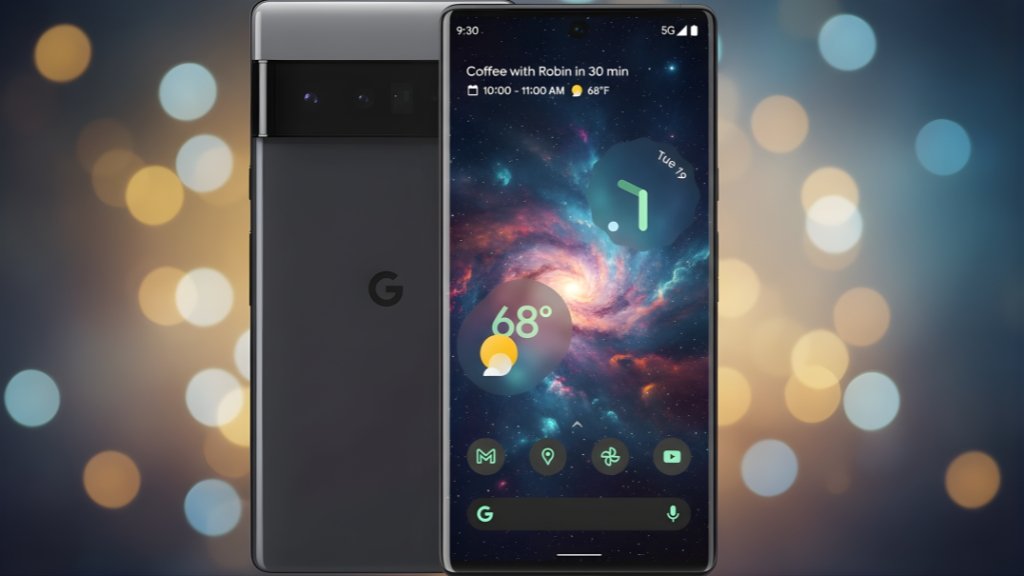
The Google Pixel 6 Pro 5G marked Google’s bold re-entry into top-tier hardware with an emphasis on camera quality, on-device artificial intelligence, and a cleaner Android experience tightly integrated with Google services. Launched as the flagship of the Pixel 6 family, the Pixel 6 Pro pairs a premium build and display with Google’s custom Tensor chipset and advanced computational photography features. This review walks through the phone’s design, display, performance, cameras, battery and charging, software and updates, connectivity, audio, practical day-to-day use, pros and cons, and a clear verdict so you can decide whether the Pixel 6 Pro is right for you.
Key specifications snapshot
Chipset: Google Tensor (first generation)
Display: 6.7-inch LTPO AMOLED, QHD+ (≈3120×1440), adaptive refresh up to 120 Hz
Memory & storage: 12 GB RAM (Pro), storage options commonly 128 GB / 256 GB / 512 GB (UFS)
Rear cameras: Triple array — 50 MP wide (main), 12 MP ultrawide, 48 MP telephoto (4× optical zoom via 1.07x sensor + tertiary zoom)
Front camera: 11.1 MP (wide)
Battery: ~5000 mAh class (device marketed with large battery optimized via software)
Charging: Wired fast charging (varies by adapter), wireless charging & battery share (reverse wireless)
OS & updates: Ships with Android 12 (Material You) and Google’s multi-year update promise
Other: 5G support, Wi-Fi 6, Bluetooth, in-display fingerprint, stereo speakers, IP68 water/dust resistance
(These specs reflect the mainstream Pixel 6 Pro configuration and are used throughout this review to explain real-world behavior.)
Design & build quality
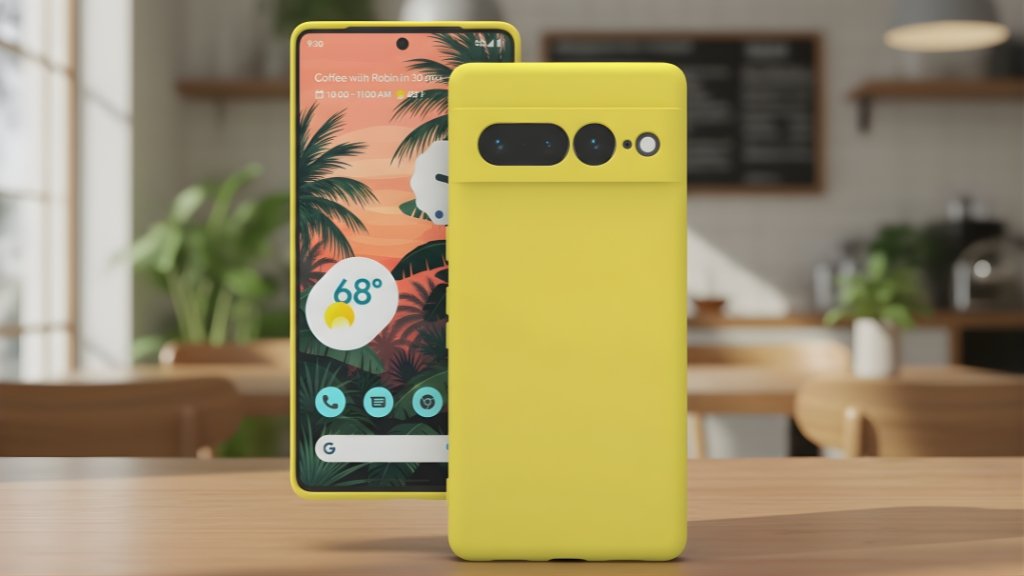
The Pixel 6 Pro departs from conservative smartphone styling and introduces a distinctive horizontal camera bar across the rear that spans the device’s width. That camera band is both a design statement and a functional element — it houses the triple cameras and creates a stable resting plane when the phone lies flat.
Materials and fit feel premium: a glass front (Gorilla Glass), glass back, and a metal frame. The phone has a substantial presence in the hand while remaining reasonably balanced for its large display size. The curved edges of the display blend into the frame for a modern look; bezels are slim but still present. IP68 dust and water resistance give peace of mind for daily use.
Ergonomics: the Pro’s 6.7-inch size makes it a two-hand device for many users, though the rounded frame and textured finish keep it comfortable over extended sessions. The camera bar slightly raises the rear, which both protects lenses and makes the phone wobble a little on flat surfaces.
Display: bright, fluid and highly readable
The Pixel 6 Pro’s 6.7-inch LTPO AMOLED is one of its strongest hardware attributes. It offers QHD+ resolution, deep blacks and excellent contrast that benefit HDR video and dark-themed interfaces. The adaptive refresh technology scales between 10 Hz and 120 Hz depending on content, balancing smoothness (especially in scrolling and animations) with battery conservation.
Color rendition is tuned for natural yet punchy tones; Google’s software provides display profiles (Natural / Boosted) and adaptive color controls aligned with Material You theming. Peak brightness is sufficient for indoor and most outdoor use; automatic brightness is responsive. For users who frequently watch HDR content or desire the sharpest pixel density for close viewing, the QHD+ panel delivers a premium viewing experience.
Performance & Tensor chipset
Google’s Tensor SoC represents a shift in priorities: raw benchmark leadership was not the sole goal. Instead, Tensor integrates specialized blocks for machine learning and on-device AI that power camera processing, speech recognition and custom Pixel features. In daily use the Pixel 6 Pro feels fluid: app launches, multitasking, and navigation are smooth. Intensive gaming and heavy synthetic workloads reveal that Tensor trades some peak GPU/CPU headroom compared with the top Snapdragon silicon of its time, but in practice most users won’t notice day-to-day.
Tensor’s strengths shine in tasks that rely on machine learning — faster HDR blending, enhanced voice transcription, live translation and computational camera tricks. Thermals are managed by software throttling; under very long sustained loads you may see performance step down to preserve temperature and battery life.
Cameras — computational photography at the center
Photography is the Pixel 6 Pro’s headline feature. Google married a larger 50 MP main sensor with its advanced processing pipeline to produce reliably excellent still images across a range of lighting conditions.
Main camera: great dynamic range, accurate exposure, convincing detail and strong low-light performance thanks to Night Sight. Images tend toward natural colors with pleasing skin tones.
Ultrawide: useful field of view with respectable edge control and color matching to the main lens. Not as resolution-rich as the primary sensor, but solid for landscapes and group shots.
Telephoto: offers optical zoom reach (roughly 4× optical equivalent in aggregate), and combined with Super Res Zoom algorithms, produces usable detail at higher zoom ranges. Stabilization and processing minimize blur and noise at longer focal lengths.
Video: capable recording up to 4K at common frame rates, with decent stabilization and accurate color. Google focused video improvements in software updates to smooth exposure and maintain color consistency.
Pixel-specific utilities — Magic Eraser, Motion Mode, Real Tone and advanced HDR — elevate the photography workflow beyond raw hardware, making it accessible for casual users and useful for creators who prioritize single-take quality without manual adjustments.
Battery life & charging
The Pixel 6 Pro ships with a large battery and Google’s software optimizations to manage background tasks and ML workloads. Typical real-world endurance delivers a full day for moderate to heavy users, and lighter users can approach two days with adaptive battery enabled and conservative settings. Gaming and high refresh 120 Hz use will reduce runtime accordingly.
Charging speeds are reasonable but not category-leading; Google prioritized battery health and temperature control over ultra-fast top-ups. Wireless charging and battery share (reverse wireless charging) are convenient features for ecosystem users — you can top up earbuds or accessories on the go.
Software & updates — Material You and Pixel features
One of the Pixel 6 Pro’s biggest advantages is software. It shipped with Material You — Google’s personalized theming system — and includes Pixel exclusives like Recorder (with instant transcription), Call Screen, Hold for Me, Live Translate, and frequent Feature Drops. Google also promised multi-year OS and security updates, making the phone a strong long-term proposition.
The software experience is clean and focused; bloat is minimal and the system integrates Google services deeply. Privacy controls and settings are easy to navigate, and the Pixel continues to receive features that rely on Tensor’s on-device ML capabilities.
Connectivity & extras
Pixel 6 Pro supports 5G sub-6 GHz and, depending on region, mmWave variants. Wi-Fi 6, NFC, Bluetooth and robust GNSS positioning round out the connectivity list. The phone includes stereo speakers with good loudness and an enjoyable soundstage for a built-in solution.
Security features include an in-display fingerprint reader and face unlock improvements; the on-screen fingerprint sensor speed depends on software tuning but is generally reliable.
Real-world use: daily life, gaming, multimedia and calls
In everyday life the Pixel 6 Pro excels at communication, photography, and content consumption. The large display is ideal for streaming and reading; the camera makes it easy to capture moments with minimal fuss. Gaming is satisfactory for casual and many demanding titles, though prolonged high-frame gaming can warm the device and trigger throttling. Call quality, cellular reception and speakerphone performance are solid.
Pros & Cons — quick summary
Pros
Class-leading still photography and useful computational camera features.
Premium QHD+ LTPO AMOLED with adaptive 120 Hz.
Tensor enables on-device AI features and enhanced Pixel experiences.
Clean software with long-term update promise and exclusive features.
Solid build, IP68 rating and wireless charging support.
Cons
Tensor achieves strength in AI tasks but isn’t the top benchmark performer for raw CPU/GPU workloads.
Charging speeds are not the fastest on the market.
Large size may be unwieldy for single-hand use.
Some early software iterations had calibration issues that required updates (software maturity improved over time).
Final verdict
The Google Pixel 6 Pro 5G is a smartphone designed around intelligent software and photography rather than chasing benchmark supremacy. If your priorities are exceptional still photography, a premium and adaptable display, a clean Android experience with guaranteed long-term updates, and meaningful on-device AI features, the Pixel 6 Pro delivers an excellent package. Power users who demand the absolute fastest raw benchmark performance or the fastest wired charging may prefer other flagships; but for most users seeking a dependable, camera-forward, software-rich flagship experience, the Pixel 6 Pro stands out as a compelling choice.
Disclaimer
Specifications, software features and availability vary by market and model variant. Battery capacities, charging rates and performance may differ based on region and firmware versions. This review synthesizes hardware characteristics and real-world behavior typical for Pixel 6 Pro devices; exact results depend on software updates, network conditions, and individual usage patterns. Always verify the specific model and software level for your region before purchasing.

Comments (0)
Leave a Comment
No comments yet. Be the first to comment!