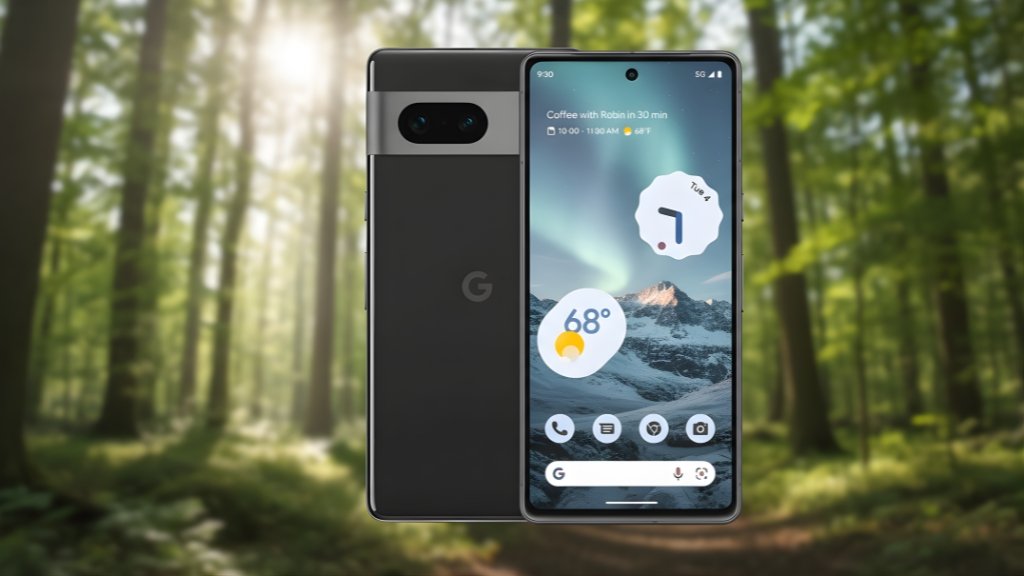
The Google Pixel 7 5G represents Google’s practical approach to a modern flagship: it refines what worked in previous Pixel phones and focuses on three core strengths — computational photography, a clean and timely Android experience, and helpful on-device AI. The Pixel 7 balances everyday performance with efficient battery life, a compact and premium build, and Google’s software features that aim to make the phone more useful in daily life. This review covers the Pixel 7’s design, display, chipset and performance, cameras, battery and charging, software and updates, real-world pros and cons, and a final verdict to help you decide whether it’s the right phone for you.
What’s in the box & key specs snapshot
Out of the box you get the Pixel 7, a USB-C cable, SIM tool and paperwork. No charger in the box (expect to use an existing USB-C charger). Key specifications at a glance:
Processor: Google Tensor G2.
Display: ~6.3-inch OLED, Full HD+ resolution, up to 90 Hz variable refresh.
Memory & storage: typically 8 GB RAM with 128 GB or 256 GB storage options.
Rear cameras: 50 MP main + 12 MP ultrawide.
Front camera: ~10.8 MP.
Battery: around 4,300–4,400 mAh.
Connectivity: 5G, Wi-Fi, Bluetooth, NFC.
Build: glass front and back, aluminum frame, IP water/dust resistance.
Software: ships with modern Android version and multi-year updates from Google.
These core elements shape the Pixel 7’s identity: premium feel, photography focus, and clean Android with Google’s AI features.
Design and build — compact, refined, and comfortable
The Pixel 7 continues the Pixel family’s distinctive look while refining details. The aluminum camera bar is a direct visual cue and doubles as a functional, sturdy structural element. The back often uses a matte glass finish that sheds fingerprints better than glossy backs, and the frame is chamfered for a comfortable grip.
At roughly a 6.3-inch diagonal, the display size hits a sweet spot — big enough for media and multitasking, yet compact enough for comfortable one-handed use. The phone feels solid in hand, with tight tolerances and no wobble between glass and frame. The IP rating gives confidence against accidental splashes and occasional spills. Overall, the Pixel 7 is made to be used daily without feeling fragile.
Display — bright, accurate and smooth enough
The Pixel 7 uses an OLED panel tuned for pleasing color and deep blacks. The FHD+ resolution keeps pixel density high for crisp text and sharp images. Google’s “Smooth Display” works at up to 90 Hz; the effect is noticeable in scrolling and animations and helps the phone feel snappier than typical 60 Hz devices while conserving battery compared with higher 120 Hz panels.
Color reproduction leans toward natural and pleasing — not oversaturated — which benefits photography and video playback where faithful tones matter. Peak brightness is strong enough for most indoor and outdoor viewing, though extreme direct sunlight might require some extra brightness. In short, the screen is excellent for everyday use: reading, streaming, social media and casual gaming.
Performance & Tensor G2 — optimized for smart features
Google’s Tensor G2 isn’t about winning synthetic benchmarks; it’s about delivering practical performance for the Pixel’s feature set. The chipset is optimized for on-device machine learning tasks: image processing, speech recognition, real-time translation and other AI-driven features. In normal use, the Pixel 7 feels responsive — apps open quickly, multitasking is smooth and camera processing happens with minimal delay.
If you’re a heavy mobile gamer or routinely run raw CPU/GPU-intensive workloads, there are chips that provide higher benchmark numbers. But for most users the Pixel 7 provides excellent day-to-day performance, especially where Google’s integrated AI features accelerate user-facing tasks.
Cameras — the Pixel photographic experience, improved sensor hardware
Photography is the Pixel 7’s headline feature. The combination of a high-resolution main sensor and Google’s advanced computational processing yields images that are consistently pleasing across lighting conditions.
Main camera (50 MP): captures detailed raw data that the processing pipeline converts into bright, well-exposed images with natural colors, strong dynamic range and faithful skin tones. Daytime shots are sharp and balanced with minimal effort.
Ultrawide (12 MP): provides wider framing for landscapes and group shots; edge correction and color matching with the main camera are handled well.
Low-light & Night Sight: Google’s Night Sight remains one of the best low-light modes around — it brightens scenes intelligently while keeping noise under control and preserving detail.
Selfies & video: the front camera is reliable for portraits and video calls, and the phone supports stabilized 4K recording at common frame rates. Video stabilization and HDR processing are strong overall.
Software features add value: Motion mode, Magic Eraser, Real Tone improvements, and automatic scene enhancements make it easy to get great results without technical tweaks. For users who value point-and-shoot excellence, the Pixel 7 is hard to beat.
Battery life & charging — sensible endurance with pragmatic charging speeds
The Pixel 7’s battery capacity is in the mid-4000 mAh range, and day-to-day endurance is solid: most users will comfortably reach the end of a full day with moderate to heavy use. Adaptive battery management and software optimizations help stretch runtime — background tasks are managed intelligently to preserve charge.
Charging is adequate but not ultra-fast. Wired charging rates are moderate by contemporary standards; wireless charging and reverse-wireless charging are supported on models that include those features. If you’re someone who needs extremely fast topups multiple times a day, some competing phones charge considerably faster. For the majority, the Pixel’s balance of battery life and charging is practical and reliable.
Software & updates — Google’s clean Android and the update promise
One of the Pixel’s biggest advantages is software. You get an uncluttered Android interface with Pixel-exclusive features: Recorder with instant transcription, Call Screen, Live Translate, and features that leverage on-device AI to improve usability. The phone receives prioritized security patches and OS updates for multiple years, which extends the device’s useful life and keeps the experience fresh.
Google’s feature drops also bring new capabilities over time, making the Pixel 7 feel continually improved. Privacy and security tools are integrated and accessible, helping users control permissions and data access without hunting through menus.
Real-world pros & cons
Pros
Industry-leading computational photography and consistent camera output.
Comfortable, premium build and compact footprint.
Clean Android experience with guaranteed multi-year updates.
Useful on-device AI features that improve real-world tasks.
Balanced battery life and practical everyday performance.
Cons
Charging speeds are modest compared with some competitors.
Raw benchmark performance is not top of class; extreme gamers may prefer other flagships.
No 120 Hz display (Pixel 7 uses up to 90 Hz), so ultra-smooth animation fans may notice the difference versus higher-refresh phones.
Who should buy the Pixel 7?
Choose the Pixel 7 if you value: outstanding everyday cameras, a compact and premium phone design, a clean and up-to-date Android experience with multi-year updates, and helpful AI features integrated into the OS. It’s ideal for photographers who want great results without fuss, productivity users who value on-device AI, and anyone who prefers a phone that stays current for years.
Consider other flagships if you need the absolute top raw performance, the fastest wired charging, or a 120 Hz+ display for ultra-smooth gaming and animations.
Final verdict
The Google Pixel 7 5G succeeds by focusing on what matters to most users: dependable, high-quality photography; an excellent software experience with long-term updates; and a compact, well-built design. It is not engineered to chase benchmark records or the fastest charging times — instead, it optimizes everyday utility, reliability and smarter features that make the phone more useful over time. For anyone who prioritizes camera quality, software longevity and a practical, polished user experience, the Pixel 7 is an outstanding choice.
Disclaimer
Specifications, regional features and exact model options can vary by market and carrier. Battery life and charging figures are based on manufacturer claims and common real-world test behavior; actual results depend on usage patterns, network conditions, and software updates. Always confirm current local specifications, warranty and available variants with official retailers or Google’s product pages before purchase.

Comments (0)
Leave a Comment
No comments yet. Be the first to comment!